You have 0 items in your cart
How Damselfish Cultivate the Coral Seabed
Agriculture is often viewed as a distinctly human achievement. Yet beneath the surf across tropical coral reefs, another creature manages living crops with remarkable discipline: the damselfish (family Pomacentridae). Measuring just a few inches long, these small reef dwellers practice true agriculture. They clear plots, weed out inedible plants, fertilize their harvest, and vigorously defend their underwater farms against intruders many times their size.
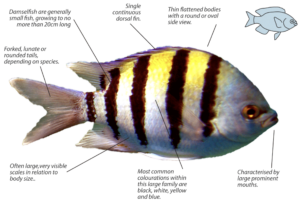
Damselfish – Pomacentridae Source: underwaterasia.info
Weeding and Sowing
Farming behavior is documented in several species, most notably within the genera Stegastes and Dischistodus. One of the clearest examples is the dusky farmer damselfish (Stegastes nigricans), which cultivates dense monocultures of delicate filamentous red algae (such as Polysiphonia species).
Unlike large generalist herbivores—such as parrotfish or surgeonfish that indiscriminately scrape algae off limestone—farmer damselfish are culinary specialists:
- Selective Weeding: The fish patrol their territory and actively pluck away unpalatable macroalgae, coarse green weeds, or calcified species. They carry the unwanted vegetation in their mouths and spit it out downstream, outside their farm borders.
- Cultivating Fragile Strains: The red algae they favor lack the chemical defenses and rigid structures needed to compete in the wild. Left unattended, these algae are quickly overtaken by tougher seaweeds or stripped bare by wandering grazers. The crop relies entirely on the damselfish’s routine gardening to persist.
- Fertilization: By depositing nutrient-rich waste directly over their beds and encouraging symbiotic mysid shrimp to shelter inside the patch, the fish ensure a steady stream of nitrogen to fuel rapid algal growth.
Pebbles, Housework, and Mate Selection
A damselfish farm is an essential food source, but for a male, it doubles as a visual resume. During mating season, the garden becomes an open audition stage where female damselfish put potential mates through a behavioral test.
Before choosing a potential partner, a female inspects the male’s territory. She looks for an attentive, energetic partner capable of protecting her clutch from scavengers. To test his stamina and housekeeping dedication, females across several species engage in deliberate sabotage:
- The Pebble Test: The female picks up pebbles, rubble, or shells from outside the territory and drops them directly into his crops.
- The Male’s Reaction: For a territorial male, a foreign object threatens the turf and smothers his harvest. He must immediately retrieve the pebble haul it out of the boundary.
- The Evaluating Commitment: If the male is slow, careless, or easily overwhelmed by clearing the debris, the female moves on to another territory. If he promptly and repeatedly tidies the plot—passing the underwater stress test—she returns to lay her eggs securely within his care.
Once the eggs are laid and fertilized, the male guards both the nursery and the garden around the clock, fanning the clutch with fresh oxygen until the fry hatch.
Territorial Defense
A productive garden draws competition, and damselfish protect their plots with extraordinary aggression. Despite their modest size, individual farmers stake out territories ranging from one to several square meters, charging anything that crosses the perimeter.
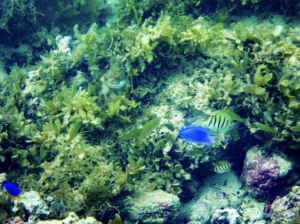
Damselfish defending algal lawns against grazers. Source: Alphotographic / Getty Images
Their defense strategy targets three primary threats:
- Roving Herbivore Schools: Large schools of tangs, surgeonfish, and parrotfish frequently sweep across the reef to pillage damselfish turf. The resident damselfish darts into the fray, snapping jaws, flaring fins, and delivering sharp nips to repel individuals.
- Invertebrate Grazers: When sea urchins or snails crawl toward the plot, damselfish physically grasp them with their teeth and heave them over the boundary edge.
- Divers and Snorkelers: Human visitors entering a farmer’s territory often experience curious tapping or light pecks against their fins and wetsuits—the fish rarely hesitates to challenge an animal hundreds of times its mass.
The Ecological Double-Edged Sword
Depending on reef health and predator balance, these fish can act as vital biodiversity engineers or drivers of coral stress.
| Ecological Role | Impact on Coral Reef Ecosystems |
| Micro-Habitat Creation | Tended algal lawns provide shelter for tiny invertebrates, harpacticoid copepods and juvenile reef species. |
| Nutrient Cycling | High algal turnover & constant metabolic activity accelerate local nitrogen and phosphorus cycling across the substrate. |
| Coral Encroachment | To expand their farms, some species bite living coral polyps to kill the tissue, creating dead skeleton patches where their favorite algae can anchor. |
| Reef Degeneration Risk | Overfishing removes top predators (groupers, snappers) and large herbivore competitors, damselfish populations can spike, accelerating algal takeover on degraded reefs. |
Why Reef Farmers Matter for Conservation
Damselfish farming demonstrates that reefs are dynamic mosaics shaped by complex behavioral interactions, rather than static coral backdrops.
Protecting these ecosystems requires looking beyond the coral itself to the predatory checks and balances that keep the reef balanced. When apex predators thrive, damselfish numbers remain regulated, keeping their farms contained and biodiverse. When marine protected areas (MPAs) are well-enforced, this miniature agricultural system functions as intended: a fascinating showcase of underwater mutualism that enriches life along the reef.
Want to Learn more about the amazing underwater life?
Ceningan Divers offer many conservation courses from Coral Restoration to Reef Fish identification. Check out our courses and programs here.