You have 0 items in your cart
The Science Beneath the Surface
Exploration of Coral Ecology, MPAs & Restoration in Nusa Penida

Introduction: Understanding an Ocean in Transition
Earth’s oceans form the beating heart of the planet’s climate system. They absorb heat, regulate weather patterns, capture carbon, and generate over half of the oxygen we breathe. Yet their health is becoming increasingly unstable as climate change, pollution, and coastal development place unprecedented strain on marine ecosystems.
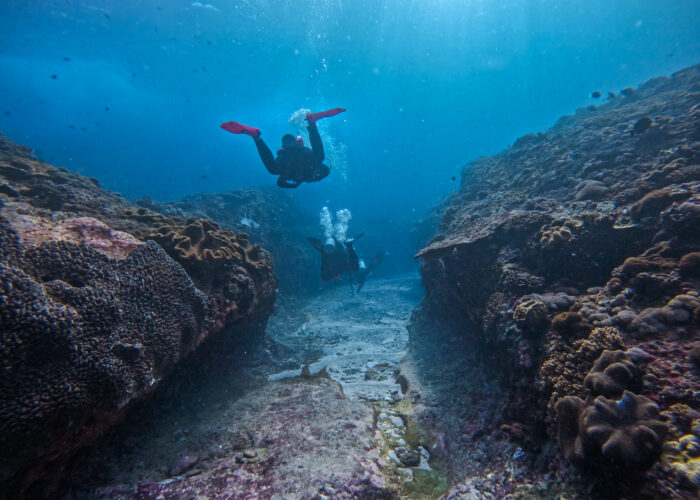
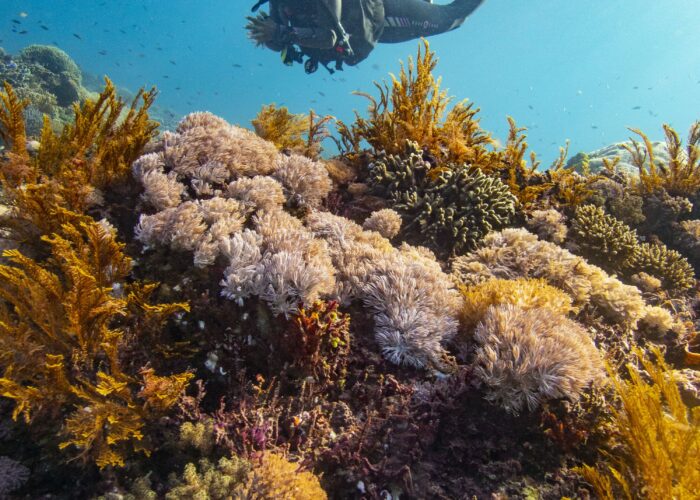
In the waters of Nusa Penida, a critical node within the global biodiversity hotspot known as the Coral Triangle, these challenges unfold in real time. Here, coral reefs, megafauna, and coastal ecosystems face accelerating pressures—but also show extraordinary resilience when supported by effective marine management.
This article presents an in‑depth scientific exploration of the region’s ecology, the threats it faces, and the solutions under way—especially through the research, conservation, and restoration initiatives led by Ceningan Divers, a PADI 5‑Star Instructor Development Dive Resort working at the intersection of science, community, and sustainability.
The Ecological Significance of Nusa Penida
Nusa Penida, along with its sister islands Nusa Lembongan and Nusa Ceningan, sits within a marine zone that supports one of the highest coral species concentrations on Earth. Its reef systems serve as biological engines, generating habitat, fisheries productivity, and ecological connectivity across the Indonesian Archipelago.
Biodiversity Highlights
Scientific assessments reveal that the region is home to:
- Over 296 coral species covering major reef‑building genera
- More than 500 reef fish species, including apex predators and schooling pelagic
- Resident populations of reef manta rays (Mobula alfredi)
- A seasonal aggregation of Mola mola, driven by deep cold‑water upwellings
- Nesting and foraging sea turtles
- A rich macro ecosystem of nudibranchs, crustaceans, cephalopods, and micro‑habitat specialists
This extraordinary diversity is supported by the Indonesian Throughflow—a deep ocean current transporting nutrient‑rich water from the Pacific to the Indian Ocean. The resulting upwellings fertilize the reefs, fueling productivity from the smallest plankton to the largest megafauna.

Coral Bleaching: Mechanisms, Triggers & Impacts
Coral bleaching is one of the most significant threats to the world’s reefs. While often described visually as “corals turning white,” bleaching is an intricate biological process involving the breakdown of the coral‑algae symbiosis.
How Bleaching Happens
Reef‑building corals depend on symbiotic microalgae called zooxanthellae. These algae provide corals with most of their energy through photosynthesis. When corals experience stress—particularly from excessive heat—they expel the algae, losing both their color and their primary food source.
Key Drivers of Bleaching in Nusa Penida
- Marine heatwaves driven by climate change
- Elevated surface temperature anomalies, sometimes persisting for weeks
- High solar irradiance intensifying thermal stress
- Pollution & sedimentation, reducing coral resilience
- Localized physical damage, such as anchor drops or contact from inexperienced divers
While Nusa Penida’s cold‑water upwellings historically buffered corals against the worst bleaching events, intensifying global heat cycles are overwhelming these natural defenses.
Ecological Consequences
- Reduced coral growth and reproduction
- Increased susceptibility to disease
- Declines in fish biomass tied to habitat loss
- Reduced recruitment of juvenile corals
- Ecosystem‑wide phase shifts favoring algae over coral
Understanding bleaching at the local scale helps shape restoration and management strategies.
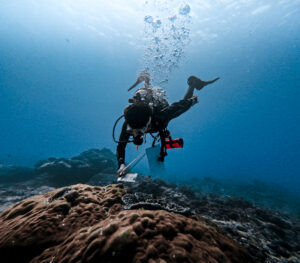
Restoration Science: Rebuilding Coral Reefs from Fragment to Colony
Reef restoration is often misunderstood as simply “planting corals.” In reality, it is a biologically intricate, data‑driven discipline grounded in ecology, genetics, oceanography, and long‑term monitoring. Successful restoration requires understanding natural recovery processes, identifying stressors, managing genetic diversity, and ensuring that restored reefs are capable of surviving future climate conditions.
Ceningan Divers follows internationally recognized best practices to ensure coral propagation efforts support—not replace—broader conservation strategies.
Scientific Foundations of Coral Restoration
1. Micro‑Fragmentation
Micro‑fragmentation capitalizes on the coral’s natural healing response. By cutting large colonies into small pieces, each fragment closes wounds rapidly and grows faster than intact colonies. This technique is particularly effective for massive coral species that typically grow slowly.
2. Coral Nursery Propagation
Fragments are transferred into ocean‑based nurseries, where they grow under controlled conditions. Nurseries include:
- Suspended coral trees, which minimize sedimentation and maximize water flow.
- Table nurseries, allowing easy access for cleaning and monitoring.
- Rope nurseries, ideal for branching species.
Nursery maintenance includes predator removal, algae cleaning, and documentation of growth rates.
3. Genetic Diversity & Resilience
Restoration efforts must avoid creating monocultures. Genetic diversity is key to reef survival under warming oceans. Ceningan Divers collects fragments from multiple donor colonies to ensure restored populations remain resilient to bleaching, disease, and acidification.
4. Out planting to the Reef
Once fragments reach sufficient size and health, they are out planted onto degraded reef areas. Divers attach corals using epoxy, nails, or natural substrate techniques. Site selection is based on ecological surveys, current modelling, and historical resilience data.
5. Monitoring & Adaptive Management
After out planting, restored sites are surveyed regularly. Monitoring methods include:
- Belt transects
- Photogrammetry and 3D mapping
- Temperature loggers
- Coral health assessments
Data feedback informs ongoing management and improves future restoration success.
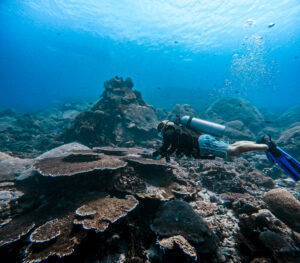
Marine Protected Areas: The Science Behind Protection
Healthy reefs depend on more than restoration—they require protection at the ecosystem scale. The Nusa Penida Marine Protected Area (MPA) is one of Indonesia’s most important conservation initiatives.
How MPAs Support Reef Recovery
- Increased Biomass & Biodiversity
Fish populations grow larger and more abundant inside protected zones, restoring natural ecological functions. - Regeneration of Coral Habitat
Reduced human impact gives corals time and space to recover from bleaching and storm damage. - Spillover Benefits to Local Fisheries
As fish populations expand, adults migrate out of protected zones into nearby fishing grounds, boosting catches. - Protection of Megafauna
Species such as manta rays display strong site fidelity. MPAs protect critical cleaning stations and feeding routes. - Climate Resilience
Healthy ecosystems bounce back more quickly after disturbances.
Challenges Faced by the MPA
Despite its value, the MPA faces ongoing pressures:
- Inconsistent enforcement of regulations
- High boat traffic at manta and mola mola sites
- Plastic inflow from monsoon currents
- Tourism outpacing environmental capacity
- Illegal fishing and destructive practices
These challenges highlight the need for strengthened governance, more scientific monitoring, and continued community engagement.

Oceanographic Dynamics of Nusa Penida
Nusa Penida’s ecology is shaped by powerful oceanographic forces.
The Indonesian Throughflow (ITF)
The ITF transports enormous volumes of water from the western Pacific to the Indian Ocean. Along the way, it generates nutrient‑rich upwellings that fertilize coral reefs.
Thermocline Dynamics
Sharp temperature gradients occur between surface and deeper layers. These thermoclines:
- Attract species like Mola mola
- Regulate nutrient cycling
- Influence bleaching severity when deep cold water temporarily cools the reefs
Larval Dispersal & Connectivity
Ocean currents transport coral and fish larvae across island groups, linking Penida’s reefs with ecosystems as far as Lombok and Sumbawa.
Threat Matrix: Pressures on the Ecosystem
Key Threat Drivers
- Climate change causing prolonged heat stress
- Marine debris and microplastics impacting all trophic levels
- Unsustainable tourism, including trampling and snorkeler damage
- Illegal or poorly managed fishing
- Coastal development altering sediment flow and water clarity
- Chemical pollution, including sunscreen contaminants
Each stressor weakens the reef’s ability to recover from natural disturbances.
Citizen Science: Expanding Research Capacity
Citizen scientists play a vital role in data collection, especially in biodiversity‑rich regions with limited formal monitoring.
Key Citizen Science Programs Supported by Ceningan Divers
- Manta ID surveys using photo identification
- Reef Check & REEF surveys documenting reef health
- Coral nursery maintenance & monitoring
- Bleaching and disease reporting
- Marine debris removal and classification feeding global databases
Divers contribute thousands of data points annually, supporting long‑term ecological analysis.


Conclusion: Science as a Bridge to Conservation
The future of Nusa Penida’s reefs depends on scientific knowledge, community engagement, and sustainable tourism. Through coral restoration, research diving, and data‑driven conservation programs, Ceningan Divers is helping to build a resilient marine ecosystem capable of withstanding the pressures of a changing climate.
By integrating ecology with education and hands‑on restoration, their work ensures that divers do more than explore the ocean—they help protect it.
The ocean’s challenges are immense, but so is its capacity for recovery. With continued scientific guidance and community commitment, the reefs of Nusa Penida can remain a thriving sanctuary for generations to come.