You have 0 items in your cart
Ceningan Divers: Rebirth of Bali’s Coral Reefs

Introduction — where the story begins
At sunrise on Nusa Ceningan, the sea glows gold. The tide is low, herons stalk the shallows, and the first dive boat of the day hums to life. For Ceningan Divers, this isn’t just the start of another day of scuba diving in Bali — it’s another chapter in a long, ongoing story of ocean conservation.
The reefs surrounding Nusa Ceningan and Nusa Penida weren’t always as vibrant as the divers who visit them today might believe. Over the years, storms, warming waters, pollution, and human impacts have scarred once-thriving coral gardens. But the ocean is resilient, and when given a chance — and a little help — it fights back.
This is the story of how Ceningan Divers became part of that healing.
Nusa Penida & Nusa Ceningan — islands shaped by current, time and life
From above, the three islands of Nusa Penida, Nusa Lembongan, and Nusa Ceningan look peaceful. But underwater, the story is one of movement — swirling currents, upwellings of cold nutrient-rich water, and thriving marine ecosystems shaped by these dynamic forces.
Here, towering coral walls drop into the blue. Manta rays glide over cleaning stations at Manta Point. Schools of snapper move in silver waves. And during the colder months, the mysterious mola mola rise from the deep.
But this beauty hides fragility.
These waters form the Nusa Penida Marine Protected Area (MPA), one of Bali’s most biologically important habitats. MPAs are like safe harbours for marine life — places where protection, managed fisheries, and conservation work together to preserve biodiversity. Without them, ecosystems collapse faster than they can recover.

The challenge — when coral reefs begin to fade
Coral reefs are the ocean’s rainforests: intricate, colorful, and full of life. But they are also among the most vulnerable ecosystems on Earth.
What threatens Bali’s reefs?
- Ocean warming and bleaching: Elevated temperatures cause corals to expel the symbiotic algae they rely on.
- Pollution: Plastics, waste, and sediment cloud water and stress coral systems.
- Overfishing: Disrupts the balance of reef food webs.
- Unsustainable tourism: Poor buoyancy, anchoring, and overcrowding can physically damage coral.
When coral dies, biodiversity plummets. Fish lose their habitat. The reef structure erodes. Tourism declines. And coastal communities lose food security.
The reefs of Nusa Penida needed more than admiration — they needed guardians.
Coral restoration — the science behind rebuilding a reef

Restoration is both a technical process and a deeply hopeful act.
How it works
Scientists and conservationists use a method called coral propagation, where small healthy coral fragments — often broken naturally — are collected and attached to underwater nursery structures. These nurseries act like underwater greenhouses, providing a safe place for corals to grow.
Once they reach a healthy size, the corals are transplanted to damaged reef areas.
Innovative techniques
- Micro-fragmentation: Corals are cut into tiny pieces that grow and fuse quickly, forming larger colonies faster.
- In-water nurseries: Seabed structures protect young corals from predators and sediment.
- Restoration monitoring: Growth, survival rates, fish populations, and habitat changes are tracked to assess success.
This scientific foundation ensures that coral restoration isn’t just symbolic — it’s effective, measurable and ecologically meaningful.
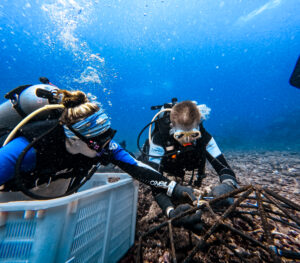
Ceningan Divers — where science meets community and storytelling
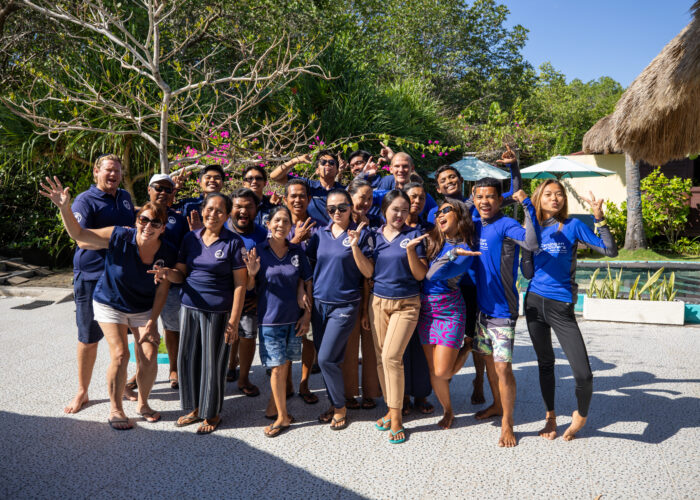
The team at Ceningan Divers didn’t begin with a plan to become conservation leaders — they arrived with a passion for the ocean, and the story unfolded from there.
Every diver who steps into their small eco-resort is invited not just to explore the ocean, but to understand it. Their conservation programs are built around three pillars:
1. Coral restoration & nursery work
Divers and volunteers help maintain nurseries, remove algae competitors, clean structures, and plant new coral colonies — each action contributing to a much bigger picture.
2. Citizen science & reef monitoring
With trained guidance, visitors conduct surveys of fish, corals, water temperature, and bleaching levels. These data points feed into long-term monitoring that supports the MPA and regional research partners.
3. Education & community empowerment
From children in local schools to new divemaster’s in training, education is the thread that ties every conservation story together. Workshops, presentations, and hands-on activities help build a local foundation for future ocean stewards.
This blend of science and storytelling turns every dive into a learning experience — and every visitor into an advocate.
Diving with purpose — the experience beneath the waves
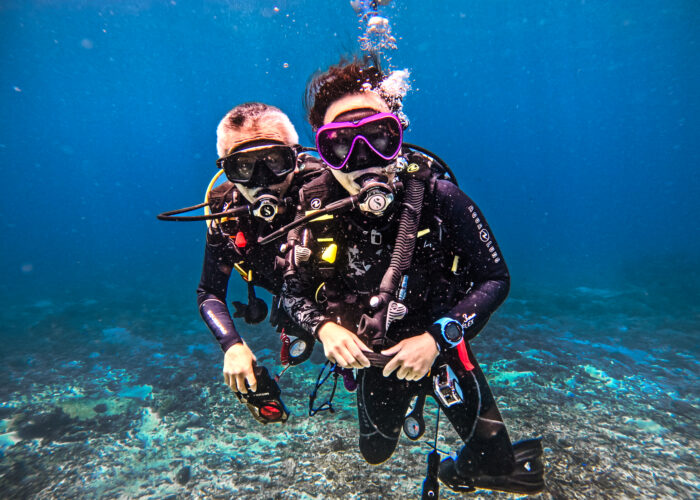
When scuba divers join Ceningan Divers for a conservation-focused dive, they do more than drift along the reef.
They learn how coral bleaching reveals itself in subtle shades of pale. How herbivorous fish help control algae. Why manta rays’ behaviour shifts with tides and plankton blooms. How temperature loggers and monitoring transects work.
Each dive becomes a chapter in a living story of ecology, adaptation and hope.
Manta rays — the gentle narrators of Nusa Penida
At Manta Point, enormous reef mantas circle cleaning stations. Watching them glide above the reef feels like drifting through a cathedral. But their presence is also data — sightings help track population stability, seasonal patterns and threats.
Mola mola — the seasonal visitors
These prehistoric-looking giants surface during colder upwelling events. Their unpredictable appearances keep divers excited and scientists curious.
Coral gardens — fragile but recovering
Many restored sites now host juvenile fish, new coral recruits, and signs of reef rejuvenation. The reef isn’t just surviving — it’s rebuilding.
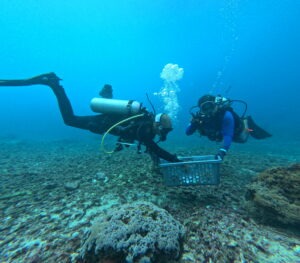
Training tomorrow’s ocean protectors — PADI courses with purpose
Education is at the heart of Ceningan Divers’ mission. Their PADI courses go beyond skills — they build awareness.
- Coral Restoration Diver: Hands-on training in nursery maintenance and transplanting.
- Underwater Naturalist: Understanding reef relationships, symbiosis, and ecology.
- Fish Identification: Recognizing indicator species that reveal reef health.
- Divemaster & Instructor Internships: Long-term programs where trainees become active contributors to conservation.
Every course adds another voice to the global story of ocean stewardship.
How visitors help the reef — everyday actions with big impact
Ceningan Divers teaches divers that conservation isn’t a separate activity — it’s a way of approaching the ocean.
Simple but powerful:
- Perfect your buoyancy
- Use reef-safe sunscreen
- Participate in monitoring dives
- Avoid touching or disturbing marine life
- Support local conservation-driven businesses
These small actions accumulate into meaningful, lasting change.
A decade of impact — measurable success stories
Behind every restored coral colony lies a story of effort, patience and persistence.
Some of Ceningan Divers’ achievements include:
- Thousands of coral fragments grown in nurseries
- Increasing survival rates through improved methods
- Enhanced fish diversity around restored sites
- Regular clean-ups removing debris from reefs and beaches
- Partnerships with universities and NGOs to advance research
These successes show that restoration and sustainable tourism can coexist — and thrive — when guided by science and community commitment.

A call to action — become part of the story
The ocean is changing, but its future is not yet written.
Every diver, volunteer, student and visitor has the power to shift the narrative toward recovery and resilience.
Whether you join a coral planting dive, enroll in a conservation course, share your experiences online, or simply choose eco-conscious operators, you contribute to the protection of Bali’s most iconic reefs.
And one day, when you return to Nusa Ceningan or Nusa Penida, you may swim over a coral colony you helped plant — a living reminder that the ocean remembers kindness.