You have 0 items in your cart
Nusa Penida: Bali’s Wild Blue Heart and the Underwater Adventures That Make It Unforgettable
Southeast of Bali, three limestone islands—Nusa Penida, Nusa Lembongan, and Nusa Ceningan—rise like green crowns above cobalt water. Beneath the surface, however, lies the real royalty: a marine realm of sweeping reefs, manta cleaning stations, seasonal sunfish, and the kind of biological variety that makes dive computers—and hearts—race. Safeguarded as the Nusa Penida Marine Protected Area (MPA), these waters are both a bucket‑list dive destination and a living classroom for conservation.
Below is your deep dive into what makes Nusa Penida special: the reef architecture, the megafauna, the seasons and currents that shape encounters, the essential dive‑site highlights, and the on‑the‑ground conservation work led by Ceningan Divers that keeps this ecosystem thriving.
Where You’re Diving: A Marine Protected Area With Serious Biodiversity
The Nusa Penida MPA wraps around all three islands and covers ~20,057 hectares of sea—a management framework designed to balance protection, sustainable use, and local livelihoods. Surveys led and compiled by the Coral Triangle Center (CTC) and partners document ~296 species of hard corals and ~576 species of reef fish within the MPA, plus extensive 1,419 hectares of coral reefs, 230 hectares of mangroves, and 108 hectares of seagrass. That’s a big ecological engine packed into a relatively small footprint, and it’s the reason the islands punch far above their weight as a dive destination.
Established by Klungkung District in 2010 and fully enacted under national/provincial frameworks by 2014, the MPA uses zoning (core, sustainable fishing, tourism, and other zones) to shape how people use the water, where anchoring is restricted, and how reef‑health data inform management. This is not just a “paper park”—it’s an evolving system with monitoring and governance baked in.
What this means for you as a diver: healthy, structurally complex reefs that support everything from macro life to schooling fish and pelagic—and a management plan that aims to keep it that way.
The Reefs: From Sun‑dappled Slopes to Current‑swept Gardens
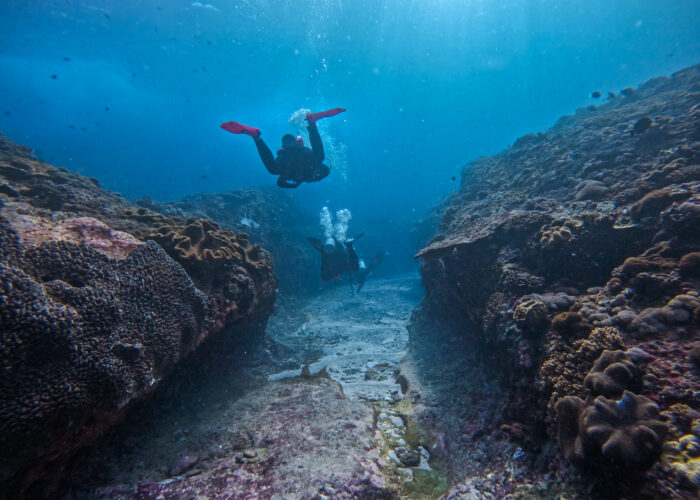
Nusa Penida’s reefs scape is varied. On leeward coasts you’ll find broad coral gardens and hard‑coral pavements with table Acropora, Porites boulders, and fields of branching colonies; on current‑facing edges, soft corals and gorgonians stud pinnacles and walls. This complexity creates micro‑habitats for nudibranchs, flatworms, shrimps, and crabs while also giving hunting grounds to jacks, trevallies, and reef sharks.
The southern and western exposures are often cooler and more oceanic—think plankton‑rich water that mantas love. North‑coast sites often serve up long, relaxed drifts over immaculate coral with turtles grazing and anthias hovering like confetti. Reef‑health monitoring by CTC and government partners continues across multiple fixed stations, giving managers (and operators) up‑to‑date insight on coral cover, fish biomass, and stressors.
The Megafauna: Why Divers Flock Here
Manta Rays, Year‑Round Icons
If there’s a single sight that defines Nusa Penida, it’s a reef manta (Mobula Alfredi) banking gracefully over a cleaning station at Manta Point. The southern coast’s plankton‑rich, cooler water draws mantas to feed and to be groomed by cleaner wrasses—creating predictable, respectful viewing for divers and snorkelers most months of the year. Cleaning station behavior is the secret sauce: mantas circle coral heads repeatedly while cleaners pick parasites and dead skin.
Best practices: stay low, don’t chase or block the mantas’ flight paths, and maintain neutral buoyancy to protect both the rays and the cleaning coral heads.

The Legendary Ocean Sunfish (Mola)
From July through October (sometimes into November), cold upwellings push temperatures down several degrees. That’s your cue to look for Mola Alexandrini (often called “mola mola”) rising from the deep for cleaning. Crystal Bay and nearby sites earn their reputation during this “cold season,” with divers scanning the blue at 20–40 m for that unmistakable moon‑shaped profile. Sightings can happen outside the window, but your odds peak when the water chills.
A note on depth & discipline: mola encounters are often deep. Good gas planning, vigilant NDL management, and staying with experienced local guides are essential to keep the magic safe and sustainable.
Signature Dive Sites (A Quick Tour)
While conditions constantly change, these “greatest hits” illustrate what’s possible:
- Manta Point (South Penida)
Rugged limestone coastline above, cleaning stations below. Expect mantas cruising shallow to mid‑depths, sometimes with bamboo rays, blue‑spotted stingrays, and seasonal mola on the wall. Surges and cooler temps are common—bring appropriate exposure. - Crystal Bay (West Penida)
Famed for water clarity (on the right tide) and a channel that funnels cooler water during mola season. On non‑mola days, enjoy white‑sand gardens, schooling fusiliers, and coral heads rich with macro. Be conservative with depth and mindful of down‑currents near the channel. - Toyapakeh / SD / North Coast Drifts
Long reef terraces that make Penida famous for “flying the reef.” When currents align, these become effortless glide‑paths over thriving coral and dense fish life, with frequent turtle sightings. (Local operators will choose the exact entry/exit based on tides and moon phase.) - Blue Corner & Mangrove (Lembongan/Ceningan)
Technically within the MPA, these sites can deliver exhilarating pelagic passes (Blue Corner) and rich hard‑coral meadows (Mangrove). Expect variable current that demands timing and experience.

Seasons, Conditions, and What They Mean for Your Logbook
- Water Temperature: ~27–29 °C most of the year; can drop to 18–22 °C during the July–October upwelling that draws mola. Bring a 5 mm (plus hooded vest) if you’re targeting that season.
- Visibility: Often 15–30 m (and more at Crystal Bay on good days), but expect it to swing with tides, swell, and plankton.
- Currents: Penida’s “engine” is current—responsible for its rich life but also its challenge. Good buoyancy, listening closely to the briefing, and staying tight with your guide are non‑negotiable.
- Manta Encounters: Year‑round, especially at southern cleaning stations.
- Mola Encounters: Most consistent July–October (sometimes into early November) when the thermocline rises.
Ceningan Divers: Conservation at the Center of the Experience
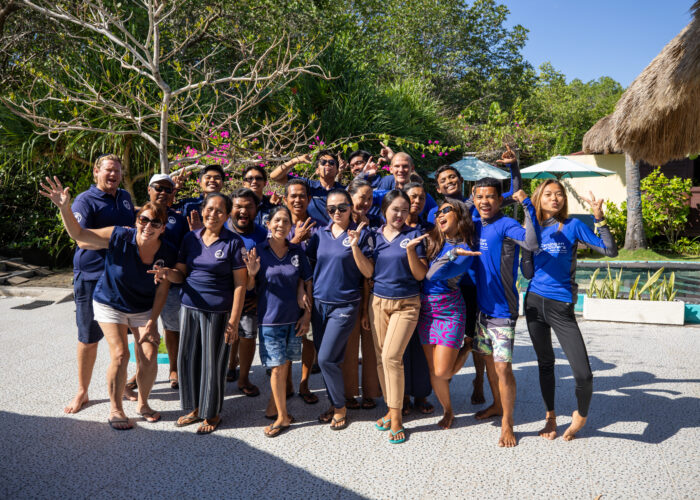
Plenty of operators run boats here. Far fewer place conservation and community at the heart of everything they do. Ceningan Divers, based on Nusa Ceningan inside the MPA, has built its reputation on precisely that alignment—pairing high‑caliber dive operations with measurable environmental action.
Recognized Global Leadership
- Green Fins (the Reef‑World Foundation’s standard for sustainable marine tourism): Ceningan Divers has been a top‑rated member since 2018, a Certified Gold Member since 2019, and achieved a perfect (zero‑impact) assessment score in 2024—the first in Indonesia to do so. In 2025 they won the Green Fins Award for outstanding commitment to sustainable marine tourism. (sirendiving.local)
- PADI Eco Center / 5‑Star IDC standing, 100% AWARE partnership, and repeated BlueGreen360 recognition further spotlight their operational standards and advocacy. (PADI, Ceningan Divers)

Hands‑On Reef Restoration & Citizen Science
Ceningan Divers runs structured conservation programs that go beyond a one‑off “eco day”:
- Intro to Coral Restoration (short courses that cover coral biology, threats, and nursery/fragment care with dives at local restoration sites). (sirendiving.local)
- Multi‑week Coral Restoration Courses that train divers in coral ID, nursery management, out‑planting, and monitoring—providing real field time and contributing labor to local projects. (sirendiving.local)
- Education & Outreach: free talks, guest workshops, and community cleanups designed to shift behavior—from banning non‑reef‑safe sunscreen on their boats to zero single‑use plastics across operations. (Ceningan Divers)
These efforts dovetail with broader MPA work by partners like CTC (e.g., reef‑health monitoring, adopt‑a‑coral programs, and capacity building for local managers). The cumulative effect: better data, better reefs, and better visitor behavior.
How Ceningan Divers Turns Principles Into Practice (What You’ll Notice)
- Briefings that go beyond “site map + signals.” Expect manta etiquette, buoyancy reminders near cleaning stations, and specific guidance on thermoclines and down‑current zones—habitat protection is integrated into the plan.
- Gear & operations aligned with impact reduction. You’ll see refillable water systems, reef‑safe sunscreen policies, and staff modeling low‑impact dive practices. (Ceningan Divers)
- Learning woven into fun. From pre‑dive mini‑lessons on manta behavior to optional conservation dives, the team treats every trip as both adventure and opportunity to help. (sirendiving.local)
Responsible Adventure: Simple Ways to Be a Better Penida Diver
- Choose operators that are verified by credible standards (e.g., Green Fins). It’s the fastest shortcut to lower impact and higher safety. (sirendiving.local)
- Master buoyancy before you go deep. Nusa Penida rewards precision—especially at cleaning stations and on current‑swept terraces.
- Maintain respectful distances from wildlife. For mantas, approach from the side and below, avoid hovering over cleaning heads, and never touch.
- Dress for the thermocline. A hooded vest over a 5 mm can turn a shivery mola wait into a long, safe, and memorable encounter.
- Listen to conservative calls. If your guide moves the plan away from a popular site due to swell or tide, that’s experience talking. Ocean conditions here can change quickly, both above and below the surface.
A Sample 3‑Day “Adventure + Conservation” Itinerary
Day 1 – North‑Coast Drifts & Coral Intro
Morning: SD / Ped drift for coral‑garden immersion and turtle encounters; afternoon: Toyapakeh terrace. Evening: coral ecology talk with Ceningan Divers; optional pool session to dial in trim and buoyancy before the southern sites. (sirendiving.local)
Day 2 – Manta Point + Citizen Science
Early run to Manta Point for cleaner‑station etiquette in action, followed by a second dive nearby. Afternoon: debris survey or reef check activity, adding data to local monitoring and sharpening your naturalist eye.
Day 3 – Mola Watch (Seasonal) + Restoration Dive
If you’re visiting July–October, head to Crystal Bay or adjacent sites for a mola watch with strict depth discipline. Cap the trip with a restoration dive session (nursery maintenance or photo‑monitoring) to leave the reef a little better than you found it. ( sirendiving.local)
Why Nusa Penida Feels So “Alive”
It’s a confluence of forces: the islands’ location along the Indonesian Throughflow, complex seabed topography that accelerates currents, seasonal upwelling that feeds the food web, and robust coral frameworks that multiply habitat. Add a functioning MPA with real monitoring and a community of operators—like Ceningan Divers—who align business with stewardship, and you get reefs that still feel exuberant. That’s increasingly rare.
For divers and snorkelers, this translates to manta encounters that are ethically managed, drifts that run along genuinely healthy coral, and seasonal shots at one of the ocean’s most otherworldly fish. For the community, it’s a pathway to livelihoods that value intact ecosystems and the long game.
Planning Your Trip
- Skill Level: Suitable for confident beginners (on the right sites) through advanced divers; advanced or deep training is recommended if you’re aiming for mola season and deeper profiles.
- When to Go: Good year‑round for mantas; July–October if mola are your must‑see. Dry season (roughly May–October) typically brings more reliable ocean conditions.
- Operator Choice: Look for a Green Fins member with strong local experience and conservation programming—Ceningan Divers checks all those boxes and more. (sirendiving.local,)
Final Thoughts: Dive for Joy, Stay for Purpose
Nusa Penida’s reputation is built on adrenaline and awe—mantas looping above you, a sunfish materializing from the blue, and endless terraces of coral life stitched together by current. But the future of that magic depends on what we do now. The MPA’s data‑driven management and the practical, day‑to‑day conservation of local operators give this place a fighting chance.
If you want your trip to be more than a highlight reel, dive with Ceningan Divers and add conservation to your adventure. Learn how the reef works, help maintain a nursery, reduce your footprint, and bring those habits home. That way, when you return—and you will—you’ll find Penida just as wild and wonderful as the first time.